
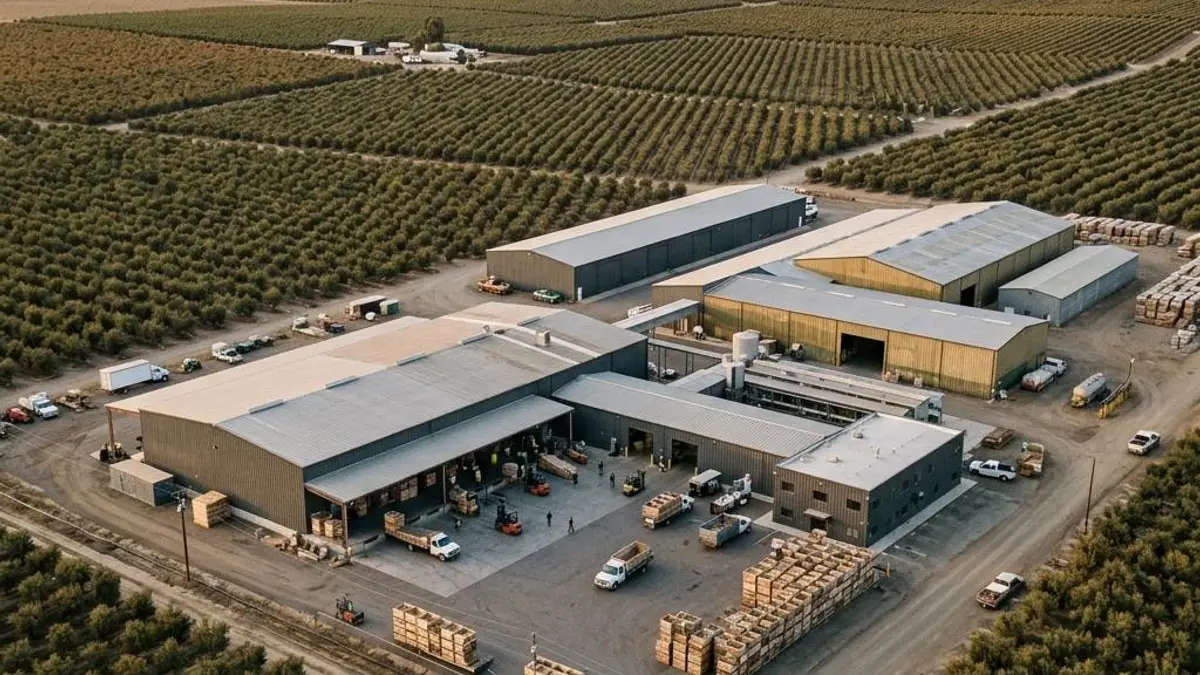
Farming & Agricultural Production
Large-scale growers need institutional-grade finance.
Row crops, orchards, vineyards, and livestock each have distinct cash cycles, collateral, and lender expectations.
How capital moves through a farm or ranch
Crop and livestock cash cycles
Producers fund an entire season before most revenue arrives.
Read more: Crop and livestock cash cycles
Row crop producers spend on seed, fertilizer, chemicals, and fuel in spring and receive most revenue after harvest, sometimes later if grain is stored and marketed over time. Livestock and dairy operations have more continuous revenue but large feed costs and periodic capital needs. In each case, the timing gap between spending and receipts is funded with operating credit, and cash flow must be forecast monthly.
Marketing, storage, and price risk
When and how a crop is sold can matter as much as yield.
Read more: Marketing, storage, and price risk
Producers choose between selling at harvest, storing for later sale, forward contracting, or using futures and options. Each approach affects price received, cash timing, and risk. Storage carries costs and requires operating credit to stay outstanding longer. Hedging can require margin deposits when prices rise. A documented marketing plan tied to cash needs helps lenders understand and support the strategy.
Land and equipment investment
Land and machinery require long-term capital that must be serviced from operations.
Read more: Land and equipment investment
Farmland purchases, cash rent, and equipment represent the largest capital commitments. Land can be financed with long-term mortgages but often returns modest current income relative to price. Equipment depreciates and requires replacement. Leasing versus owning, the balance between owned and rented acres, and the pace of equipment upgrades directly shape debt levels and the cash flow available for debt service.
Government programs and crop insurance
Support programs reduce risk but do not eliminate it.
Read more: Government programs and crop insurance
Crop insurance, commodity programs, and disaster assistance can stabilize revenue in difficult years, but coverage levels, payment timing, and eligibility vary. Lenders often consider insurance coverage when sizing operating lines. Producers should understand how much revenue is protected, when payments would arrive, and what remains exposed, so that liquidity planning reflects realistic downside cases rather than optimistic assumptions.
Where producers feel financial pressure
Operating credit renewals
Annual renewals depend on last year's results and next year's plan.
Read more: Operating credit renewals
After a weak year, lenders may reduce line size, require additional collateral, or carry over unpaid balances into term debt. Producers who present realistic projections, explain variances, and show contingency plans are better positioned. Starting renewal conversations early gives more room to adjust plans before planting decisions are locked in.
Working capital decline
Losses funded by working capital erode resilience quietly.
Read more: Working capital decline
Consecutive weak years can drain cash and inventories while land values hold, so the balance sheet looks stronger than liquidity really is. Refinancing operating losses into term debt buys time but increases fixed payments. Tracking working capital against operating expenses provides earlier warning and better planning information.
Margin compression
Input costs rising faster than prices narrow returns.
Read more: Margin compression
When fertilizer, feed, or rent costs rise faster than commodity prices, margins compress even in strong production years. Enterprise-level cost analysis helps producers decide which acres, crops, or livestock enterprises to expand, reduce, or exit, and supports realistic budgeting for the coming season.
Production risk
Weather and disease can disrupt an entire year's plan.
Read more: Production risk
Drought, flooding, and disease affect yields and herd health. Insurance helps but does not fully replace lost margin. Producers need financial plans that show how a poor production year would affect liquidity, debt service, and the following year's operating credit needs.
Generational transition
Succession affects ownership, debt, and operating control.
Read more: Generational transition
Transferring operations to the next generation can involve buyouts, new debt, and changes in management responsibility. Different family goals add complexity. Financial modeling helps families evaluate options, while legal and tax structuring remain with their attorneys and accountants.
Records suited to credit decisions
Tax-basis records may not show true profitability.
Read more: Records suited to credit decisions
Cash-basis tax records can obscure true profitability because of inventory and prepaid expense changes. Accrual-adjusted statements and enterprise analysis give lenders and owners a more accurate view, and support better decisions on expansion and borrowing. Lenders increasingly expect this level of information.
Borrower-side advisory for producers
Capital Structure & Financing
Operating line, term debt, and restructuring analysis from the producer's side.
Read more: Capital Structure & Financing
Perrin & Co. analyzes operating line needs, term debt structure, land and equipment financing, and restructuring alternatives, and supports producers in lender discussions as borrower. The firm is not a lender and does not provide crop insurance, commodity trading, or legal advice.
Finance & Accounting Advisory
Accrual-adjusted statements and monthly cash forecasting.
Read more: Finance & Accounting Advisory
Work can include accrual-adjusted financial statements, enterprise and field profitability, monthly cash forecasts tied to the marketing plan, and lender reporting packages. The aim is financial information that supports both management decisions and credit relationships throughout the season. Variances are explained as they arise.
Business Advisory
Decision support on acres, enterprises, equipment, and succession.
Read more: Business Advisory
Financial decision support evaluates land purchases or rentals, equipment investments, enterprise mix, and succession alternatives on consistent price, yield, and cost assumptions, showing how each affects cash flow, debt service, and resilience in poor years. Each option is tested against several price scenarios.
Institutional Credit & Liquidity Advisory
Lender perspective applied to renewals and stress.
Read more: Institutional Credit & Liquidity Advisory
Perrin & Co.'s commercial credit experience helps producers anticipate how lenders evaluate working capital, projections, and carryover debt. After difficult seasons, the firm supports liquidity planning and restructuring discussions on the producer's behalf, always as borrower representative. Lender terms vary by facility.
Where to start
More in Agriculture & Agribusiness
Related perspective
Discuss your farming & agricultural production priorities
A confidential conversation with Perrin & Co. — no obligation, and a candid view of whether we can help.