
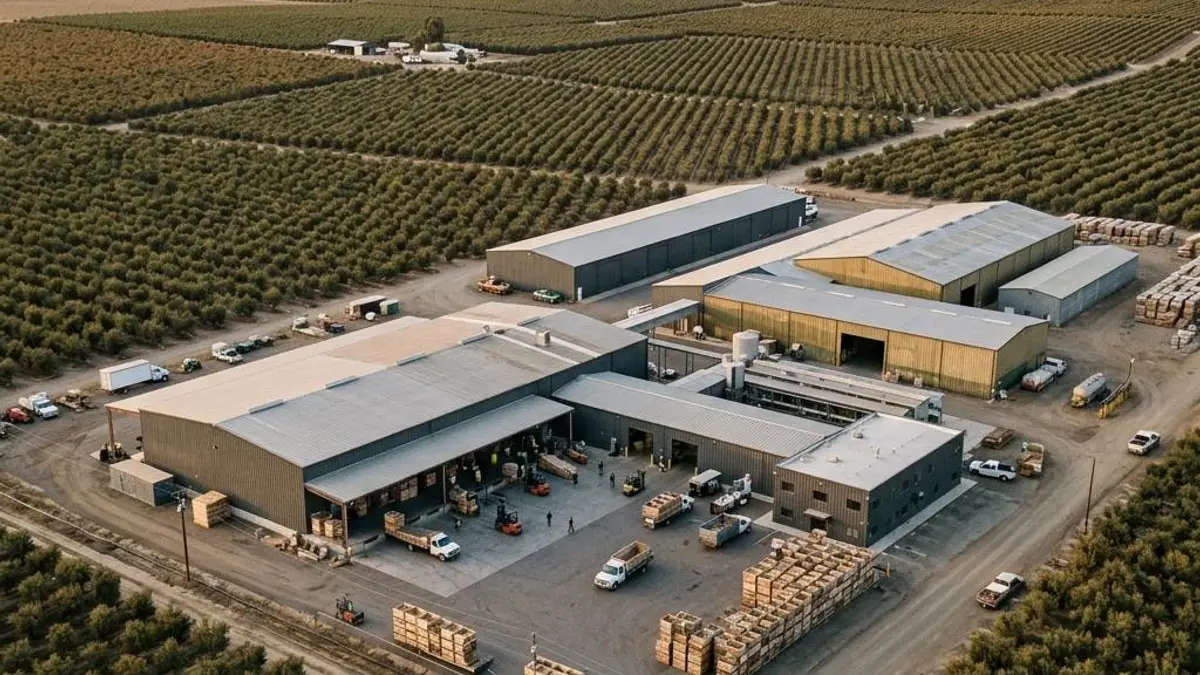
Agribusiness
The businesses between the field and the market.
Input suppliers, packers, and marketers finance their growers and their inventory at the same time.
How capital moves through agribusiness
Inventory, storage, and commodity working capital
Grain handlers and input dealers carry large seasonal inventories.
Read more: Inventory, storage, and commodity working capital
Grain elevators, cooperatives, input dealers, and equipment dealers hold significant inventory that peaks seasonally. Grain inventory may be financed through borrowing-base lines secured by hedged positions, while input dealers often extend credit to producers until harvest. Inventory value moves with commodity prices, so working-capital needs can rise sharply when prices increase, and liquidity planning must anticipate those swings.
Hedging and margin calls
Hedged positions protect margin but can demand cash quickly.
Read more: Hedging and margin calls
Grain merchandisers typically hedge inventory and forward purchase contracts with futures. When prices rise sharply, margin calls on short futures positions require cash immediately, even though the underlying grain gains value. These temporary liquidity demands can be large. Lenders often provide hedge lines for this purpose, but sizing them correctly and forecasting margin exposure under price spikes is essential. Contingency arrangements should be agreed in advance.
Producer credit and receivables
Many agribusinesses act as lenders to their farmer customers.
Read more: Producer credit and receivables
Input suppliers and equipment dealers frequently extend seasonal credit to producers, collecting after harvest. That makes their receivables a concentrated exposure to the same weather and price risks their customers face. Credit policies, monitoring, and collection practices affect both the agribusiness's liquidity and its own lender's view of collateral quality. Lenders often review this customer exposure closely when assessing the eligibility and quality of receivables.
Asset base and throughput economics
Fixed facilities earn returns only when volume flows through them.
Read more: Asset base and throughput economics
Elevators, terminals, blending plants, and dealerships carry substantial fixed costs. Profitability depends on throughput volume, handling margins, and service income. Weak harvests or lost market share reduce volume while costs remain. Capital investment decisions must consider long-term volume expectations and the competitive landscape among cooperatives, independents, and larger integrated firms. Weak harvests can also shift competitive positions, so long-term volume assumptions deserve independent testing before any major facility investment.
Where agribusinesses feel financial pressure
Margin call liquidity
Rapid price moves can strain cash even when hedged.
Read more: Margin call liquidity
Sharp price increases can generate large futures margin calls within days. Without adequate hedge lines or liquidity, businesses may be forced to liquidate positions at poor times. Stress-testing margin exposure against historical price spikes, and agreeing contingency arrangements with lenders, reduces this risk.
Customer credit risk
Receivables from producers reflect the same risks producers face.
Read more: Customer credit risk
Seasonal credit extended to farmers can become difficult to collect after a poor harvest or price decline. Concentration among a few large customers increases exposure. Disciplined credit policies, monitoring, and early collection action protect liquidity and collateral value.
Borrowing-base management
Inventory and receivable eligibility drives available credit.
Read more: Borrowing-base management
Borrowing bases for agribusinesses typically include hedged inventory, receivables, and sometimes margin account equity. Ineligible items, concentration limits, and reporting errors can reduce availability unexpectedly. Accurate, timely borrowing-base reporting is central to maintaining lender confidence. Reporting errors are easier to prevent than to explain after the fact.
Throughput and fixed cost coverage
Lower volume leaves facilities underutilized.
Read more: Throughput and fixed cost coverage
Short crops, competition, or changing logistics reduce throughput at elevators and plants. Because many costs are fixed, earnings fall quickly. Profitability analysis by location and service line supports decisions on investment, consolidation, or pricing. Reporting by location makes the tradeoffs visible to management.
Cooperative governance and member equity
Cooperatives balance member returns with capital needs.
Read more: Cooperative governance and member equity
Cooperatives allocate patronage and retire member equity under board policy. Capital investment needs compete with member expectations for cash returns. Clear financial planning helps boards set sustainable patronage and equity retirement policies. Those policies should be tested against capital plans and realistic earnings in poor years.
Consolidation and acquisition
Mergers require realistic integration and synergy analysis.
Read more: Consolidation and acquisition
Consolidation among cooperatives and dealers creates scale but involves system integration, facility rationalization, and member or customer retention. Financial analysis should test synergy assumptions carefully before commitments are made. Retention of members, customers, and key staff during integration often determines whether a combination delivers its expected value.
Advisory for businesses between farm and market
Capital Structure & Financing
Borrowing-base, hedge line, and term debt analysis as borrower.
Read more: Capital Structure & Financing
Perrin & Co. analyzes borrowing-base structures, hedge line sizing against margin exposure, and term financing for facilities, and supports agribusinesses in lender discussions as borrower. The firm does not provide commodity trading or hedging advice.
Finance & Accounting Advisory
Borrowing-base reporting, inventory controls, and location profitability.
Read more: Finance & Accounting Advisory
Work can include borrowing-base and inventory reporting, receivable monitoring, profitability by location and service line, and close processes. Interim or fractional CFO leadership is available for businesses strengthening their finance function. Reporting is designed to support borrowing-base accuracy and timely decisions by management and lenders.
Business Advisory
Decision support on facilities, consolidation, and member economics.
Read more: Business Advisory
Financial decision support evaluates facility investment, location consolidation, acquisitions, and cooperative patronage and equity policies, testing each against realistic volume and margin assumptions so boards and owners can decide with confidence. Recommendations are tested against poor-harvest scenarios as well as expected volumes.
Institutional Credit & Liquidity Advisory
Credit perspective on liquidity stress and customer credit.
Read more: Institutional Credit & Liquidity Advisory
Perrin & Co.'s commercial credit experience informs margin-call liquidity planning, customer credit policy, and lender reporting. Where price spikes or customer losses pressure liquidity, the firm supports planning and lender discussions on the agribusiness's behalf. Restructuring options are tested carefully against realistic cases.
Where to start
More in Agriculture & Agribusiness
Discuss your agribusiness priorities
A confidential conversation with Perrin & Co. — no obligation, and a candid view of whether we can help.