
Industrial Manufacturing
Engineered products, quoted margins, real costs.
Fabricators and machinery builders win on quotes and lose on estimates that miss reality.
How cash moves through an industrial manufacturer
Engineered-to-order and make-to-stock economics
Production model shapes inventory, margin, and cash timing.
Read more: Engineered-to-order and make-to-stock economics
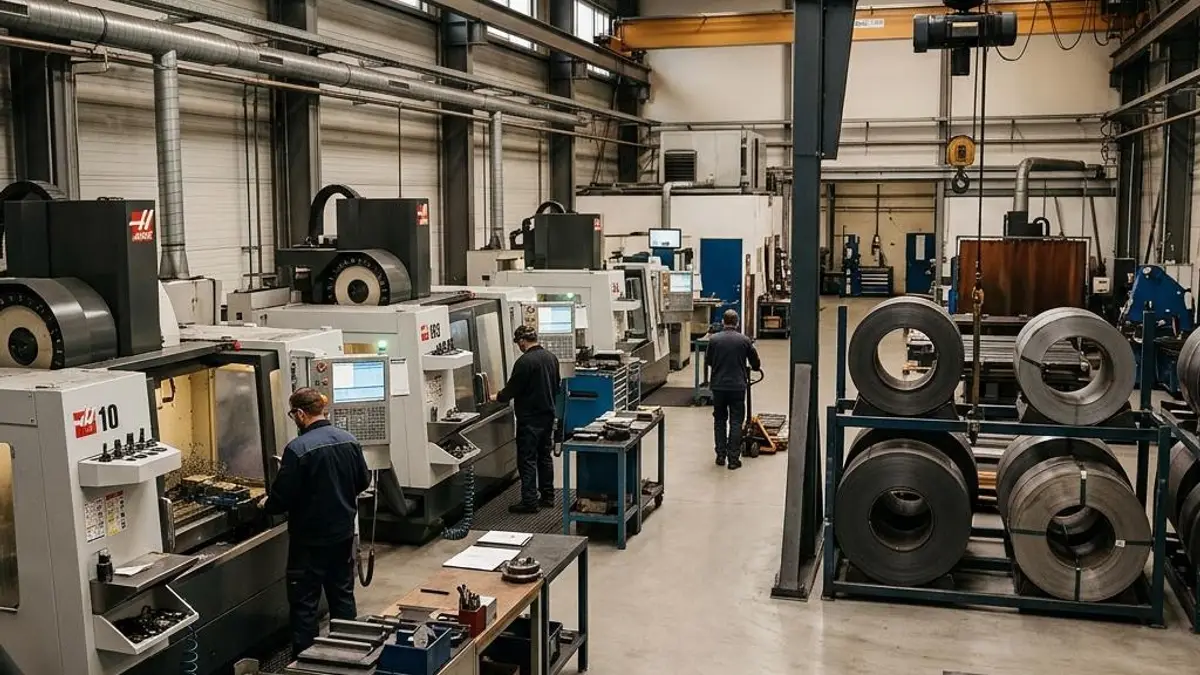
Industrial manufacturers range from job shops building to customer specifications to producers of standard components made to stock. Engineered-to-order work carries quoting risk, long lead times, and often progress payments or deposits. Make-to-stock production requires forecasting and finished goods inventory. Many companies combine both, and each model needs different costing, scheduling, and working-capital management to protect margin.
Long lead times and backlog
Backlog provides visibility but locks in pricing before costs are known.
Read more: Long lead times and backlog
Industrial equipment and components often carry lead times of months, so backlog provides revenue visibility. But pricing is set when orders are booked, while material and labor costs are incurred later. Escalation clauses, material surcharges, and periodic repricing determine how much risk the manufacturer bears. Backlog margin should be reviewed regularly against current cost, not just at booking.
Capacity, maintenance, and capital intensity
Machine time is the constraint that determines throughput and margin.
Read more: Capacity, maintenance, and capital intensity
CNC machines, presses, fabrication equipment, and test stands represent significant capital and constrain throughput. Unplanned downtime reduces output and raises unit cost. Preventive maintenance, equipment replacement timing, and capacity investment decisions directly affect margin and debt levels. Understanding which work centers are bottlenecks focuses investment where it will increase profitable output. Throughput gains at a bottleneck are often worth more than added capacity elsewhere in the plant.
Working-capital financing and customer terms
Large industrial customers often impose long payment terms.
Read more: Working-capital financing and customer terms
Original equipment manufacturers and industrial distributors may demand extended payment terms, consignment inventory, or supply chain finance programs. These arrangements shift working-capital burden to the supplier. Asset-based lines fund the gap, with availability depending on receivable eligibility and inventory quality. Customer concentration can limit eligibility, so financing must be planned alongside customer strategy. Supply chain finance programs carry their own costs and terms to evaluate.
Where industrial manufacturers feel pressure
Quoting and job costing
Inaccurate quotes lock in losses for months.
Read more: Quoting and job costing
Engineered-to-order work depends on accurate estimates of material, labor hours, and machine time. When actual costs are not compared systematically with quotes, the same errors repeat across many jobs. Closing the loop between job costing and quoting improves margin directly and builds confidence in future pricing.
Material escalation in backlog
Fixed prices on long-lead orders expose margin to cost increases.
Read more: Material escalation in backlog
Steel, aluminum, and component price increases between order and production erode margin on backlog. Surcharge mechanisms and repricing clauses help but must be negotiated and enforced. Reviewing backlog margin against current cost identifies exposure early and supports conversations with customers.
Equipment downtime and maintenance
Aging equipment raises cost and limits throughput.
Read more: Equipment downtime and maintenance
Deferred maintenance and aging equipment increase breakdowns, scrap, and overtime. Replacement requires capital that must be justified and financed. Tracking downtime and maintenance cost by work center helps management prioritize investment and avoid surprises that disrupt delivery.
Skilled labor constraints
Machinist and technician shortages limit growth.
Read more: Skilled labor constraints
Skilled operators and programmers are difficult to recruit and retain. Labor constraints can prevent the company from converting backlog efficiently, increasing overtime and outsourcing. Workforce planning, training investment, and selective automation should be evaluated together with clear financial cases.
Customer terms and concentration
Large customers impose terms that strain working capital.
Read more: Customer terms and concentration
Extended payment terms, consignment, and supply chain finance programs shift working capital to the manufacturer. Concentration in a few customers limits borrowing-base eligibility and increases risk. Customer profitability should include the cost of the working capital each customer requires.
Work-in-process visibility
Long production cycles make inventory valuation difficult.
Read more: Work-in-process visibility
Work in process on long jobs can be large and hard to value accurately. Errors distort monthly margins and borrowing-base reporting. Consistent work-in-process tracking and reconciliation give management and lenders confidence in reported results. Accurate work in process also reduces surprises at year end.
Advisory for engineered products and job-shop economics
Capital Structure & Financing
Borrowing-base, equipment, and growth financing as borrower.
Read more: Capital Structure & Financing
Perrin & Co. analyzes asset-based facilities, equipment financing, and covenant headroom against backlog, capacity investment, and customer terms, and supports management in lender discussions as borrower. Analysis shows how customer programs such as consignment or extended terms affect availability. Terms vary by lender and facility.
Finance & Accounting Advisory
Job costing, work-in-process valuation, and close.
Read more: Finance & Accounting Advisory
Work can include job-cost and quote-to-actual analysis, work-in-process tracking, standard cost updates, and close processes that reconcile inventory each month. Interim or fractional CFO and controller leadership is available during growth, transition, or lender reporting upgrades. Reporting is designed for lender review and covenant compliance.
Business Advisory
Pricing, capacity, and customer profitability decisions.
Read more: Business Advisory
Financial decision support evaluates pricing and surcharge strategy, bottleneck capacity investment, make-versus-buy choices, and customer profitability including working-capital cost. Recommendations focus on improving margin and cash conversion with the capacity the company actually has. Each recommendation is tested against realistic demand and capacity assumptions.
Technology Solutions
Linking shop-floor data to costing and reporting.
Read more: Technology Solutions
Perrin & Co.'s Technology Solutions capability can help connect shop-floor time capture, production scheduling, and accounting systems, giving management timely job-cost and work-in-process data and reducing the manual effort behind monthly close and borrowing-base reporting. Faster close also improves decision-making on the plant floor.
Where to start
More in Manufacturing & Industrials
Related perspective
Discuss your industrial manufacturing priorities
A confidential conversation with Perrin & Co. — no obligation, and a candid view of whether we can help.