
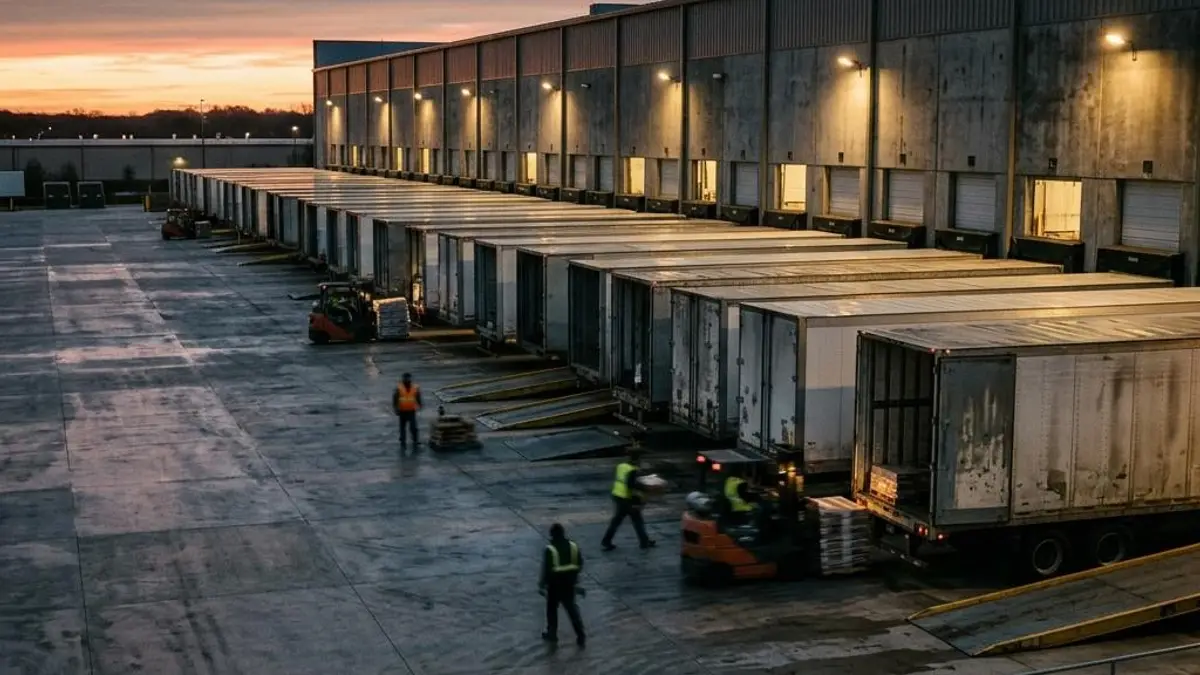
Warehousing
Space, labor, and contracts — priced correctly.
Warehouse operators win on utilization and labor productivity under customer contracts.
How cash moves through a warehouse operation
Space, handling, and value-added revenue
Warehouses earn from storage, handling, and services.
Read more: Space, handling, and value-added revenue
Third-party warehouses charge for storage by pallet or square foot, handling for receiving and shipping, and value-added services such as kitting, labeling, and returns processing. Contract warehousing may use cost-plus or fixed-fee arrangements. Revenue depends on occupancy, throughput, and service mix. Understanding profitability by customer and activity is essential because each customer uses space and labor differently.
Labor productivity
Labor is the largest controllable cost.
Read more: Labor productivity
Warehouse operations depend on pickers, packers, forklift operators, and supervisors. Productivity measured as units or lines per labor hour determines cost per order. Peak seasons require temporary labor, which is often less productive and more expensive. Labor availability and wages have increased significantly, so productivity improvement and automation are central to maintaining margins. Productivity gains often deliver the fastest improvements in margin per order.
Facility leases and capacity commitments
Long-term leases fix costs while customer contracts may be shorter.
Read more: Facility leases and capacity commitments
Warehouses are typically leased for many years, while customer contracts may run one to three years. If a major customer leaves, the operator bears the space cost until it is refilled. Matching lease commitments to customer contracts and maintaining a diversified customer base reduce the risk of stranded capacity. Lease terms deserve careful review before any new customer contract is signed, especially when that customer would occupy a large share of a facility or require dedicated equipment and staff.
Automation and capital investment
Automation improves productivity but requires substantial capital.
Read more: Automation and capital investment
Conveyors, sortation systems, robotics, and warehouse management software improve productivity and accuracy but require large investments. Returns depend on volume, customer contract duration, and labor savings. Automation tied to a single customer contract carries risk if that customer leaves. Investment decisions should test returns against realistic contract and volume scenarios before commitments are made. Each investment deserves careful testing. Automation can also improve accuracy and reduce damage claims significantly.
Where warehousing companies feel pressure
Labor cost and availability
Wage increases and shortages raise cost per order.
Read more: Labor cost and availability
Competition for warehouse workers has raised wages and turnover. Temporary labor during peaks is costly and less productive. Tracking productivity by activity and customer helps operators price accurately and identify where process or automation improvements would help most.
Customer contract pricing
Contracts may not cover rising costs.
Read more: Customer contract pricing
Fixed-rate contracts without adequate escalation expose operators to wage and occupancy increases. Customers with complex requirements may consume more labor than priced. Customer profitability analysis supports repricing and contract negotiations. Activity-based analysis often reveals these differences clearly and gives operators evidence for renegotiation.
Space utilization
Unused space carries full cost.
Read more: Space utilization
Customer departures or seasonal swings can leave space empty while lease costs continue. Occupancy planning, flexible contracts, and a diverse customer base reduce exposure. Tracking utilization by facility informs leasing and sales priorities. Vacancy should be tracked monthly. Sales efforts should follow utilization data.
Automation investment risk
Capital tied to customer contracts can become stranded.
Read more: Automation investment risk
Automation investments sized for a single customer's volume may not be recoverable if the contract ends. Contract terms that address investment recovery and diversified use of equipment reduce risk. Equipment that can serve multiple customers holds its value better, and leases for automation can be matched to contract terms.
Peak season management
Seasonal peaks strain labor and space.
Read more: Peak season management
Holiday and promotional peaks require additional labor and space at premium cost. Inaccurate customer forecasts lead to over- or under-staffing. Planning peaks with customers and pricing peak services appropriately protects margin. Peak surcharges should be agreed in advance with customers and reflected in contracts.
Billing accuracy
Unbilled activities reduce revenue.
Read more: Billing accuracy
Complex rate structures for storage, handling, and value-added services make billing errors common. Unbilled activities reduce revenue without notice. Automated billing tied to warehouse system data improves accuracy and cash flow.
Advisory for third-party and contract warehouse operators
Finance & Accounting Advisory
Customer profitability, activity costing, and billing.
Read more: Finance & Accounting Advisory
Perrin & Co. can implement customer and activity-based profitability reporting, billing processes tied to operational data, and close improvements. Interim or fractional CFO leadership is available for growing operators or those preparing for financing or sale.
Business Advisory
Pricing, capacity, and automation decisions.
Read more: Business Advisory
Financial decision support evaluates customer pricing, facility utilization, lease commitments, and automation investments against realistic volume and contract scenarios. The aim is profitable growth with manageable fixed commitments. Lease renewal options and customer contract terms are compared so fixed commitments do not outlast revenue.
Capital Structure & Financing
Automation and growth financing analysis as borrower.
Read more: Capital Structure & Financing
Perrin & Co. analyzes equipment and automation financing, working-capital needs, and refinancing alternatives, and supports operators in lender discussions as borrower. Terms vary by lender and facility. Fleet replacement schedules are matched to financing terms and expected resale values.
Technology Solutions
Connecting warehouse management and billing systems.
Read more: Technology Solutions
Perrin & Co.'s Technology Solutions capability can help integrate warehouse management, labor tracking, and accounting systems so activity data drives accurate billing and customer profitability reporting. Better data also reduces billing disputes, improves customer reporting, and shortens month-end close. Better systems also reduce manual effort.
Where to start
More in Transportation & Logistics
Discuss your warehousing priorities
A confidential conversation with Perrin & Co. — no obligation, and a candid view of whether we can help.