
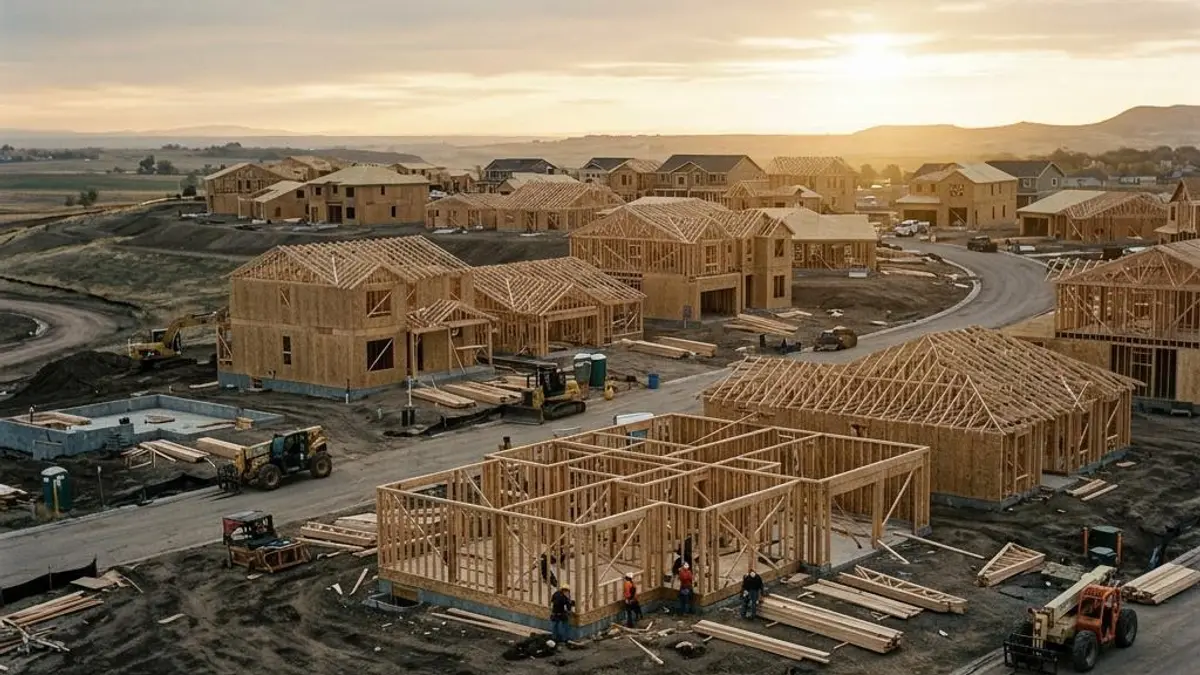
Infrastructure Development
Long-lived assets, long-dated financing questions.
Infrastructure projects require upfront capital measured against decades of expected cash flow.
How capital moves through long-lived infrastructure
Project finance and contracted revenue
Long-term contracts make future cash flows financeable.
Read more: Project finance and contracted revenue
Infrastructure assets are frequently financed on the strength of contracted or regulated revenue: availability payments, user fees, tolls, or long-term service agreements. Lenders size debt to forecast cash flow and debt service coverage rather than to sponsor balance sheets. The quality of the revenue contract, counterparty strength, and reserve requirements therefore drive how much debt the project can carry and on what terms.
Development risk and pre-construction capital
Capital is spent at risk long before financial close.
Read more: Development risk and pre-construction capital
Before any construction loan funds, developers spend on feasibility, permitting, environmental review, engineering, and procurement. This development capital carries the highest risk and is usually equity. Delays in approvals or financing extend the period of spending without revenue, and the cost of capital at this stage strongly influences whether the eventual project returns justify the effort. Sponsors therefore stage spending against milestones so that capital at risk grows only as approval uncertainty falls.
Public-private structures and funding layers
Projects often combine public grants, private debt, and sponsor equity.
Read more: Public-private structures and funding layers
Public-private partnerships, grant-supported projects, and tax-advantaged financing stack multiple funding sources with different conditions, reporting, and drawdown timing. Each layer may restrict use of funds or impose milestones. Coordinating these sources so that construction is never waiting on one of them requires a detailed sources-and-uses schedule and a clear understanding of each agreement. Missed conditions can delay funding even when the project is otherwise on schedule.
Construction-to-operations transition
Value is confirmed only when the asset performs as forecast.
Read more: Construction-to-operations transition
During construction, contractors carry schedule and cost risk, often under fixed-price arrangements backed by security. At completion, the asset must meet performance tests before revenue begins in earnest. Operating costs, lifecycle maintenance reserves, and actual usage then determine whether the financing assumptions hold, and whether refinancing or recapitalization becomes available. Strong early operating data often supports better long-term financing terms.
Where infrastructure finances meet friction
Permitting and approval delays
Approval timing moves the entire financial model.
Read more: Permitting and approval delays
Environmental reviews, rights-of-way, and local approvals can extend development periods by months or years. Every delay adds carrying cost and can push a project past financing commitments or funding deadlines. Models should test schedule sensitivity explicitly rather than assume approvals on plan.
Cost escalation after commitment
Fixed budgets meet rising material and labor costs.
Read more: Cost escalation after commitment
Long development periods mean cost estimates age before construction. Escalation can exceed contingency, forcing value engineering, additional equity, or renegotiation. Understanding which party bears escalation under each contract matters to sponsors and contractors alike. Escalation clauses, contingency drawdown, and change procedures should be modeled together.
Counterparty and revenue risk
Project debt is only as strong as the contract behind it.
Read more: Counterparty and revenue risk
Availability payments depend on public counterparties' budgets; usage-based revenue depends on demand forecasts. Lenders test both. Sponsors should understand the downside cases lenders will run and how reserves, covenants, and distribution tests respond. Reserve sizing often reflects these cases more than the base forecast.
Multi-source funding coordination
Grants, loans, and equity rarely draw on the same calendar.
Read more: Multi-source funding coordination
Each funding source has its own conditions precedent, reporting requirements, and reimbursement timing. A grant that reimburses after spending can create a bridge need. A detailed cash schedule identifies gaps before contractors are waiting on payment. Bridge financing, where needed, should be arranged before the gap arises.
Contractor balance-sheet strain
Large fixed-price contracts concentrate risk on the builder.
Read more: Contractor balance-sheet strain
Contractors on major infrastructure projects may post significant security, carry long payment cycles, and absorb schedule penalties. Concentration in a single large project can expose the contractor's entire balance sheet, so project-level forecasting and liquidity planning are essential. Security posted on one project can also reduce capacity available for others.
Lifecycle cost and reserve planning
Underfunded maintenance reserves surface years after close.
Read more: Lifecycle cost and reserve planning
Long-term concession or service agreements require reserves for major maintenance and replacement. Underestimating lifecycle cost reduces distributions later and can trigger covenant issues. Revisiting reserve assumptions against actual asset condition keeps forecasts honest. Independent condition data should inform those reviews.
Advisory applied to sponsor, developer, and contractor positions
Capital Structure & Financing
Sources-and-uses, debt sizing analysis, and lender preparation from the sponsor or contractor side.
Read more: Capital Structure & Financing
Perrin & Co. builds and tests financial models that show how revenue contracts, reserves, and coverage requirements shape debt capacity. Representing the sponsor, developer, or contractor, the firm prepares management for lender diligence and evaluates alternative funding structures. The firm does not arrange or place securities.
Finance & Accounting Advisory
Project-level reporting and controls across multiple funding sources.
Read more: Finance & Accounting Advisory
Work can include drawdown schedules, grant and loan compliance reporting, cost tracking against budget and contingency, and close processes for project entities. The aim is reporting that lenders, public partners, and boards can rely on throughout construction and operations. Interim finance leadership can support project entities that lack dedicated staff.
Business Advisory
Decision support on project selection, timing, and risk allocation.
Read more: Business Advisory
Financial decision support helps sponsors and contractors evaluate whether a project's risk allocation, schedule, and return justify commitment, and how development spending should be staged against approval milestones to limit capital at risk. The same discipline helps contractors decide which projects justify their pursuit cost.
Institutional Credit & Liquidity Advisory
Credit experience applied to coverage tests, reserves, and lender reporting.
Read more: Institutional Credit & Liquidity Advisory
Perrin & Co.'s commercial credit experience informs how coverage ratios, reserve accounts, and distribution tests are presented and monitored, helping management anticipate how lenders evaluate project performance. Where a project faces covenant pressure, the firm supports liquidity planning and amendment discussions on the borrower's behalf.
Where to start
- Capital StructureFunding and financing strategy.
- Business AdvisoryProject economics and partnership decisions.
Private-sector advisory, not specialized public-sector credentials. Perrin & Co.'s experience is in private-sector financial and business advisory. Specialized government accounting, federal acquisition regulation, cost-accounting-standards, or public-sector audit qualifications are not represented here. Where such requirements apply, engagements are coordinated with appropriately qualified specialists.
More in Construction & Engineering
Discuss your infrastructure development priorities
A confidential conversation with Perrin & Co. — no obligation, and a candid view of whether we can help.